Life of Fred Math Review: Is This Story-Based Homeschool Math Curriculum Worth It?
Over the past four years of homeschooling, we’ve tried several different math programs and homeschool math curriculums. Some we didn’t like at all, some sort of worked, and others we simply tried to make work. But we never found one that my daughter truly enjoyed or fully understood.
That changed when we discovered Life of Fred.
This unique story-based homeschool math curriculum has completely changed how my daughter feels about math. Instead of dreading it, she’s actually excited to do her lessons and even better, she’s truly understanding the concepts.
In this Life of Fred math review, I’m sharing why we love this curriculum and what makes Life of Fred homeschool math so different from traditional math programs.
What Is Life of Fred Math?
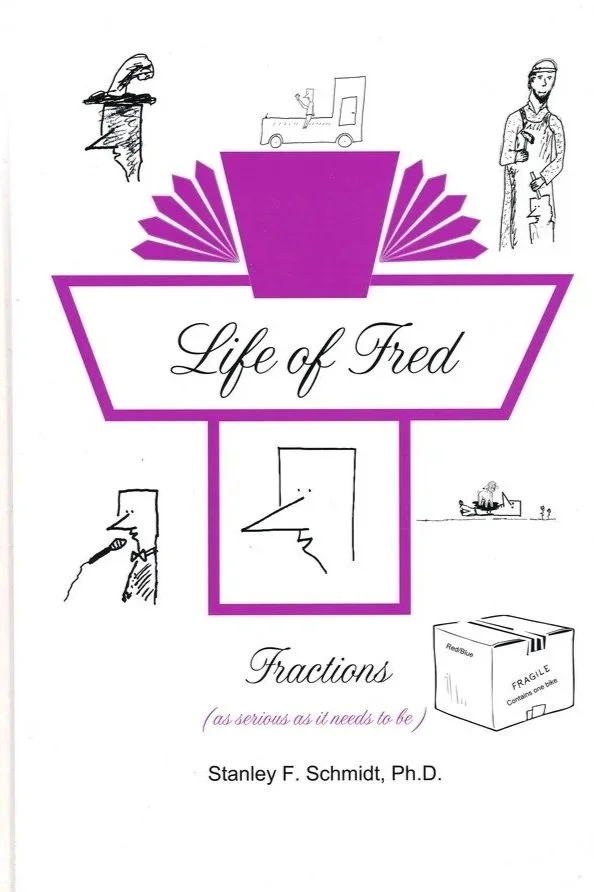
The Life of Fred math series was created by Dr. Stanley Schmidt, a former high school math teacher and college professor at City College of San Francisco. The idea for the series actually began during his very first semester of teaching when he was just 22 years old. While teaching geometry, he drew a character named Fred Gauss, a child prodigy, on the blackboard. Fred quickly became a regular and humorous part of his lessons, helping students better visualize math concepts in real-life situations.
What makes Life of Fred so different from many traditional homeschool math curriculums is its unique story-based teaching approach. The books follow Fred, a five-year-old math professor at Kittens University. Throughout each lesson, students learn new math concepts while helping Fred solve everyday problems.
Instead of pages of repetitive worksheets, the math is woven naturally into the story, making learning feel more engaging and meaningful.
The Life of Fred math curriculum covers everything from elementary math all the way through high school and even college-level topics. Rather than being organized by traditional grade levels, the series is skill-based, allowing students to move through the books at their own pace as they master new concepts.
What a Typical Life of Fred Lesson Looks Like
In the lower elementary books, parents will typically read the lesson or story aloud to their child. As your child grows into upper elementary and beyond, or as their reading skills improve, they can begin reading the lessons independently.
Each lesson in the Life of Fred math curriculum is written in story format and broken into short chapters. As students read the chapter, they are introduced to a new math concept while following the adventures of Fred.
At the end of each lesson, students complete a section called “Your Turn to Play.” This section usually includes about 5–10 practice questions that help reinforce the concept they just learned. Instead of long worksheets, these questions focus on helping students think through the math and apply what they learned in the story.
After every five chapters, there is a section called a “Bridge.” The Bridge acts as a review and helps students revisit concepts they have already learned throughout the book. I really appreciate this as a parent because it helps reinforce previous lessons so they don’t forget what they learned earlier.
There are five Bridges in each book (Try 1–5), which give students multiple chances to practice and make sure they truly understand the material before moving forward.
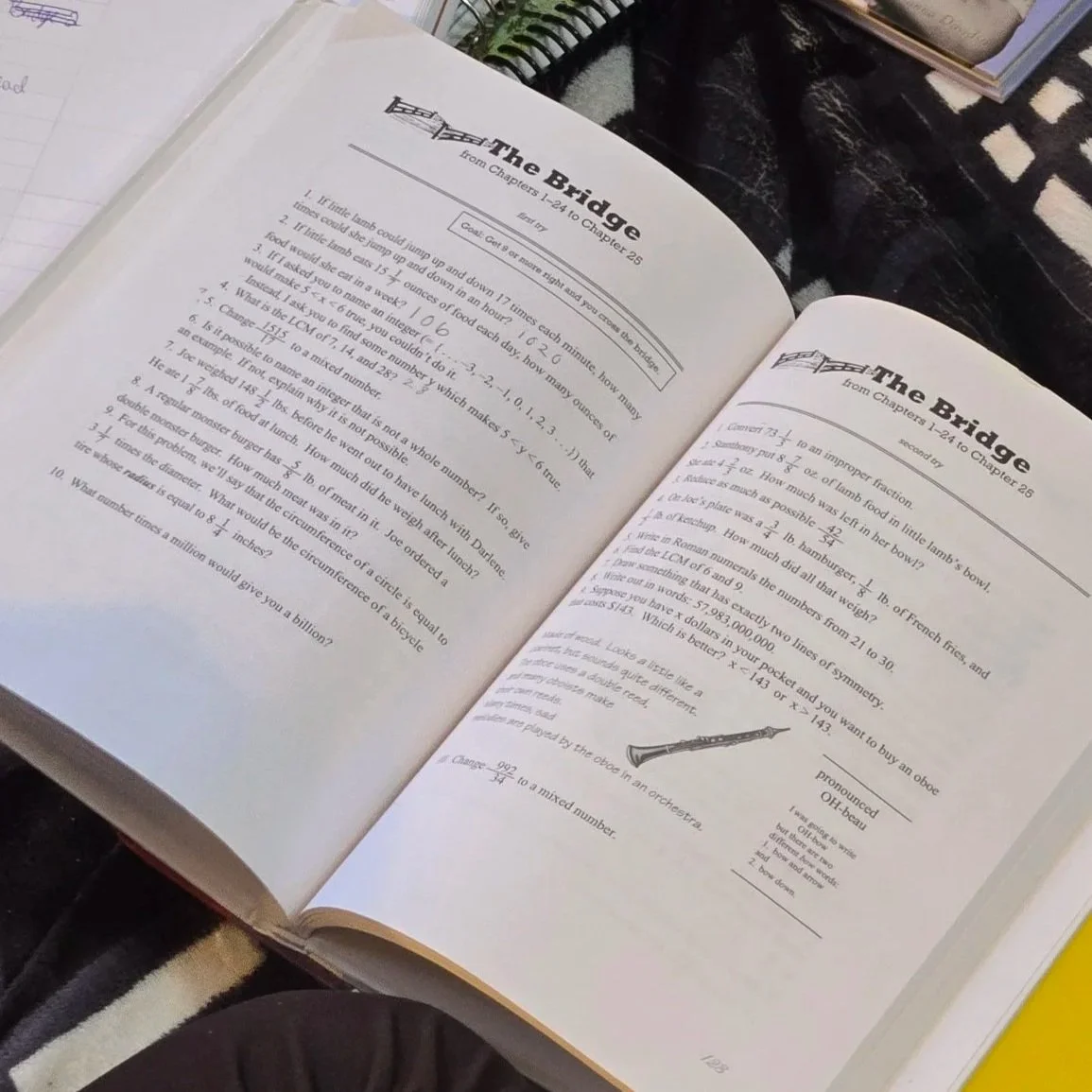
As a mom, I want my daughter to master before she moves on. I love how there is multiple chances if she needs extra practice.
One thing many homeschool families love about Life of Fred homeschool math is that the lessons are fairly short. Depending on how quickly your child grasps new concepts, a lesson can usually be completed in about 20–30 minutes, making it easy to fit into a homeschool day.
Children can begin the series once they are comfortable with basic addition and subtraction up to 10. Another helpful feature is that the books are organized alphabetically, making the series simple to follow as your child progresses.
What We Love About Life of Fred
What my daughter loves most about Life of Fred are the silly stories and the funny situations Fred finds himself in. Each chapter walks students through a problem step by step, helping them understand how to solve it along the way. This approach is especially helpful for visual learners, since they can picture the situation as they work through the math concept.
As a parent, I love that the Life of Fred math curriculum encourages independence. Once children are comfortable reading the lessons on their own, they can work through the chapters independently, which makes it a great option for busy homeschool days.
The lessons are also short, which helps keep kids focused and prevents math from feeling overwhelming.
Another thing I really appreciate is that students are solving real-life style problems, not just random problems on a worksheet. The story-based approach helps kids see how math connects to everyday situations.
This has been a great fit for our homeschool, especially for a child who wasn’t always excited about math. My daughter went from asking, “Do I have to do math?” to saying things like, “Can I do another chapter?” or “Can I do my math first?”
And as a homeschool parent, that kind of excitement about learning is something I love to see.
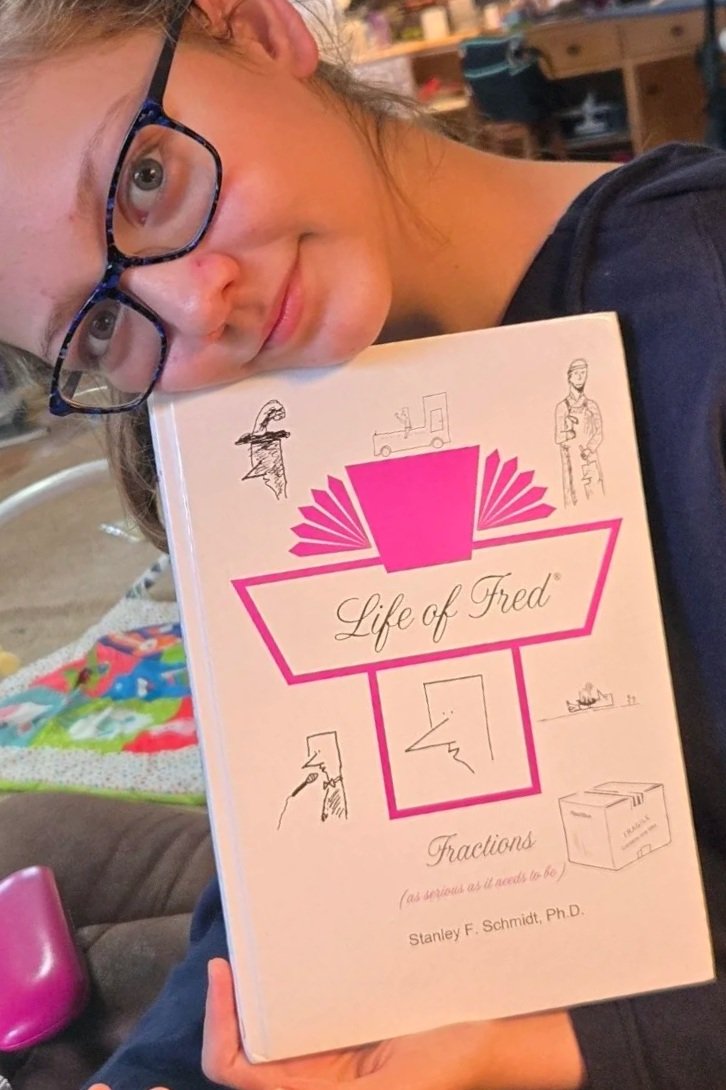
We went from “Do I have to do my math?”
To “Can I do my math first?” and “Can I do another chapter?”
Cons: Things to Consider Before Buying Life of Fred
Because Life of Fred is a story-based math curriculum, it is naturally more reading-heavy than many traditional math programs. For younger students or children who struggle with reading, this may require more parent involvement, especially in the early books when lessons need to be read aloud.
Another thing to consider is the amount of practice. Some children learn well with the 5–10 questions in the “Your Turn to Play” section, but others may need additional repetition to fully grasp a concept.
If your child benefits from more practice problems, you may want to add supplemental worksheets or purchase the optional Life of Fred companion practice books for extra reinforcement.
Like any homeschool math curriculum, the key is finding what works best for your child’s learning style.
Is Life of Fred Worth It for Your Homeschool?
The Life of Fred math curriculum works especially well for students who learn best through storytelling and visual thinking. Because the lessons are written as engaging stories, it helps many children see how math works in real-life situations instead of just solving problems on a worksheet.
However, this may not be the ideal homeschool math program if you prefer a more traditional approach with lots of worksheets and repetitive practice. Some students thrive with that structure, and Life of Fred takes a very different approach to teaching math concepts.
Overall, Life of Fred has been a great fit for our homeschool. My daughter enjoys the stories, understands the concepts, and is excited to do her math lessons.
As long as she continues learning and staying eager to open her math book, we plan to keep using this curriculum in our homeschool.

Save with a Bundle
Different aged bundles are available on Reading Rainbow
Frequently Asked Questions About Life of Fred Math Curriculum
1. What age or grade level is Life of Fred for?
Life of Fred covers a wide range of levels, from early elementary math all the way through high school and even advanced math topics. The books are not organized by traditional grade levels but instead follow a skill-based progression. Many children can begin the early books once they are comfortable with basic addition and subtraction.
2. Can students use Life of Fred independently?
Younger children may need a parent to read the stories aloud, especially in the early books. However, once students develop stronger reading skills, many are able to work through the lessons independently, making it a great option for independent homeschool learners.
3. Is Life of Fred enough for math in a homeschool?
For some students, Life of Fred can work as a complete math curriculum. However, children who need more repetition or practice may benefit from additional worksheets or the optional companion practice books that go along with the series.
4. What makes Life of Fred different from other homeschool math programs?
Unlike traditional math curriculums that rely heavily on worksheets, Life of Fred teaches math through engaging stories. Students follow Fred’s adventures while learning how to apply math concepts to real-life situations.
5. What type of learner does Life of Fred work best for?
Life of Fred tends to work well for students who enjoy stories, visual learning, and creative thinking. It can be especially helpful for children who struggle with or dislike traditional worksheet-based math programs.